
- Home
- Daily Field Report Report ID: 74355
- Edit Download Report
Daily Field Report
Observations/Finding
As requested, the site was visited by a representative from AS Engineering and Consulting (ASEC) to provide quality control inspection and testing services. Visual observation techniques were employed to verify compliance with project drawings, specifications, applicable codes, and material submittals. The following observations were made during the site visit:
Daily Report on Excavation and Backfill Activities
- Building Pads 114 and 115
Excavation was performed using a CAT 349E excavator, with hauling conducted by two CAT 745C heavy-duty dump trucks. A Komatsu 61Pxi bulldozer spread the soil, and compaction was carried out using a CAT 815F roller packer.- The soil moisture appeared adequate, and the compaction process was satisfactory.
- However, nuclear density testing revealed slightly higher moisture levels and compaction below 95%. This was attributed to underlying wet soil from previous conditions.
- The issue was communicated to the Superintendent and is expected to be addressed by next Monday.
- Sewer Line Work (Manhole A11 to A12)
A 9-foot-deep trench was excavated for the sewer line between manholes A11 and A12.- The trench was backfilled and compacted.
- Soil moisture was optimal, and the compaction achieved acceptable results.
- Spillway Footing Inspection
- A 76-foot-long and 18-foot-wide spillway footing area was excavated to the bottom of the footing elevation.
- Ram Mogulla of ASEC and the writer of this report were on site to observe and verify the footing.
- At the excavation surface, organic-laden fill material mixed with tree debris was observed throughout the footing’s length and width.
- Probing revealed multiple soft zones within the footing area that would not meet the required bearing capacity as indicated in the spillway drawings.
Further Investigation
- Test pits were dug in the proposed location of the wall section to assess the depth of organic-laden soils.
- Excavation reached approximately eight feet, the maximum reach of the excavator, and revealed organic-laden alluvial soils with strong odors and high moisture content.
- Based on these findings, the required bearing pressure of 2,500 psf cannot be supported in its current condition at this location.
Proposed Solutions
Several potential solutions were considered to address the situation:
- Removal and Replacement of Unsuitable Soils
- This option involves removing the undesirable soils and replacing them with structural fill.
- However, the current bottom-of-footing elevation is approximately five to six feet below the pond elevation. Further excavation may introduce groundwater into the area, making this solution less desirable given the field conditions.
- Installation of Deep Foundations (Helical Piers)
- Installing deep foundations, such as helical piers, may provide a suitable solution.
- The estimated depths for the piers could not be determined at this time. A group of helical piers may need to be installed and tied into the proposed footing for the retaining wall.
- The design of the helical piers will be performed by others.
Additional Notes
- Density test results indicate that most of the compacted materials met the project requirement of 95% of the maximum dry density as per ASTM Standard Proctor (ASTM D698).
AS Engineering and Consulting, LLC, appreciates the opportunity to assist you with this project. If you have any questions regarding this report, please do not hesitate to contact us. We are happy to discuss any details further.
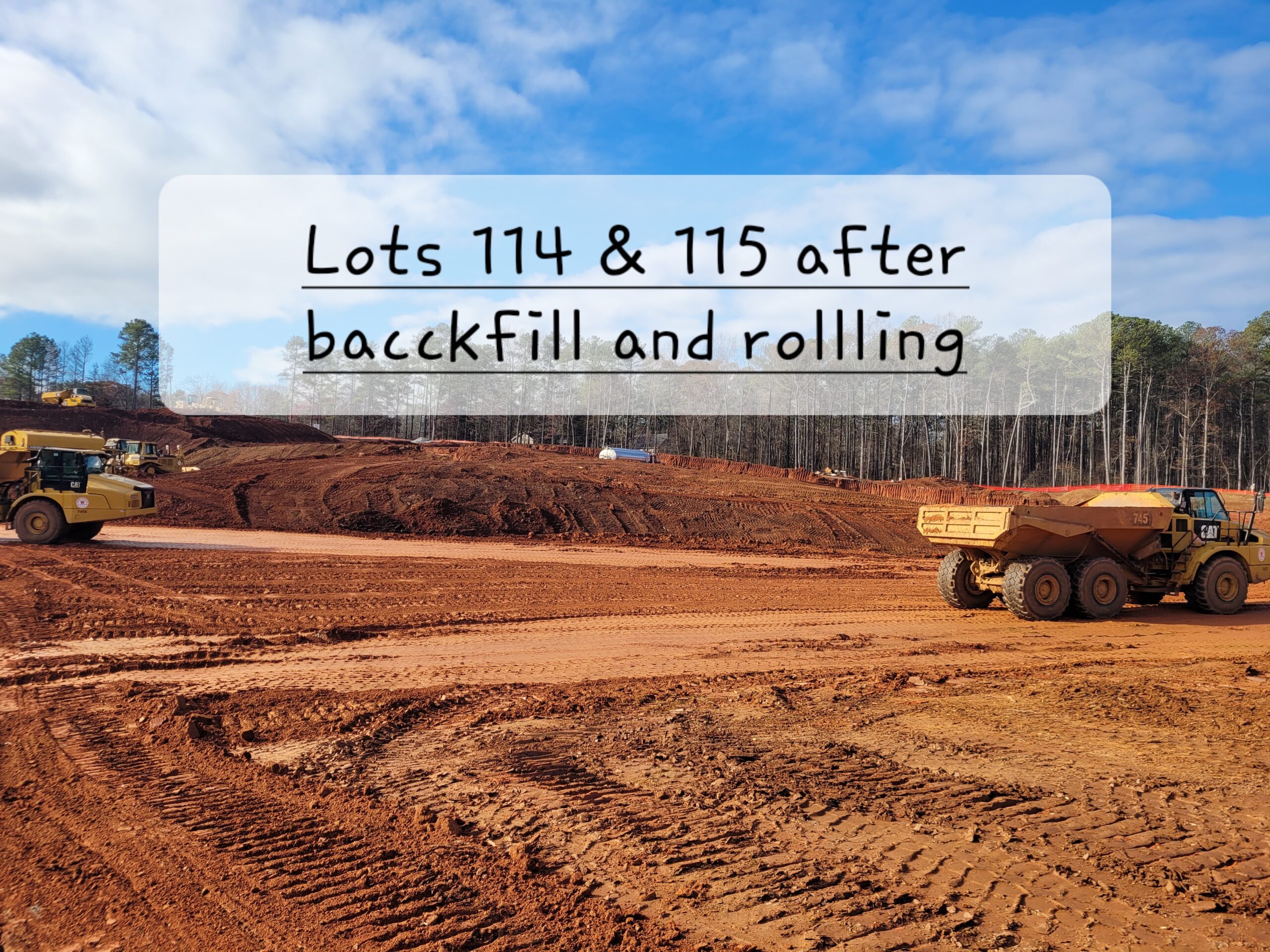
Lots 114 & 115 after backfill and packing
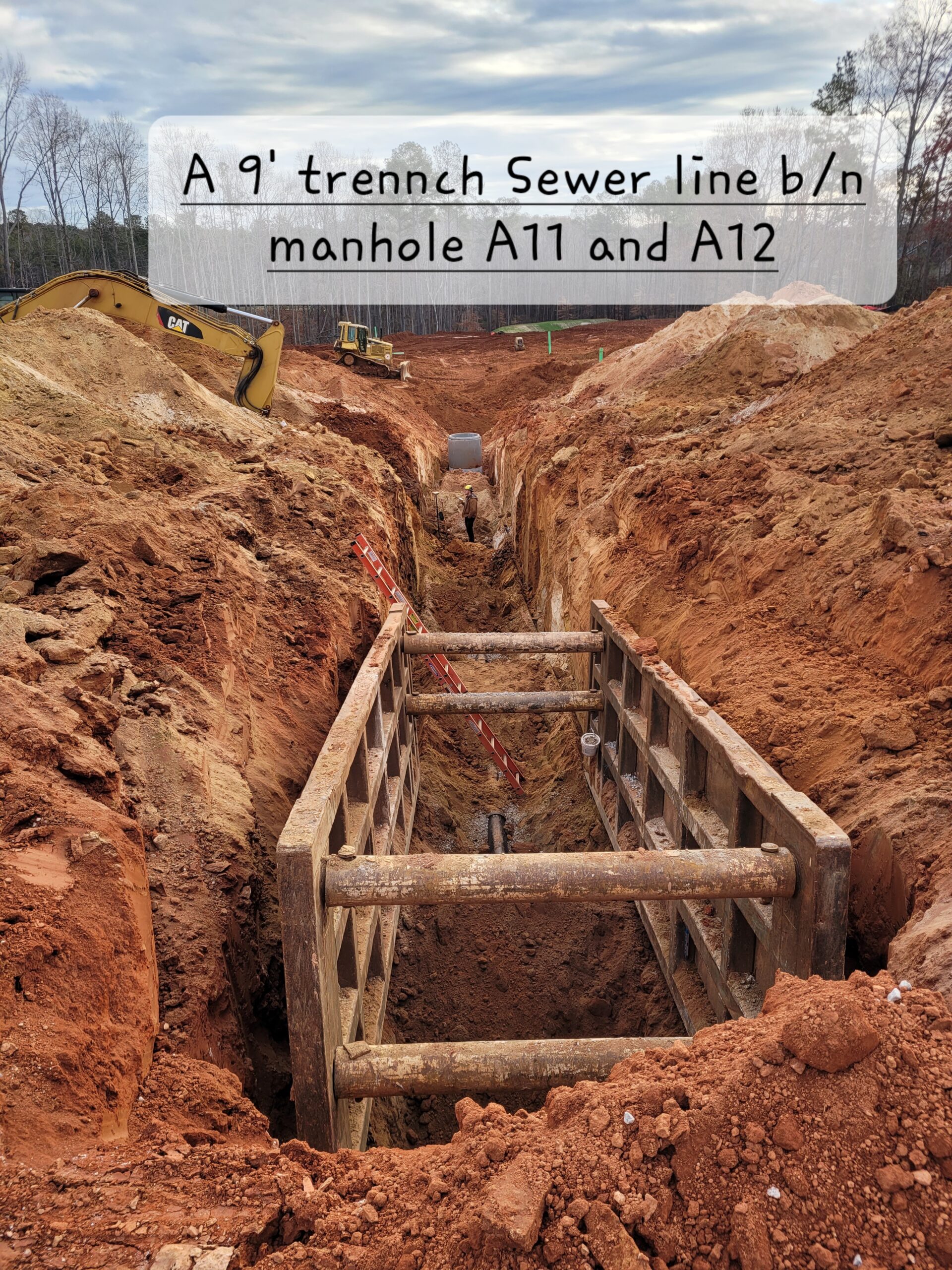
A deep sewer line trench before backfill
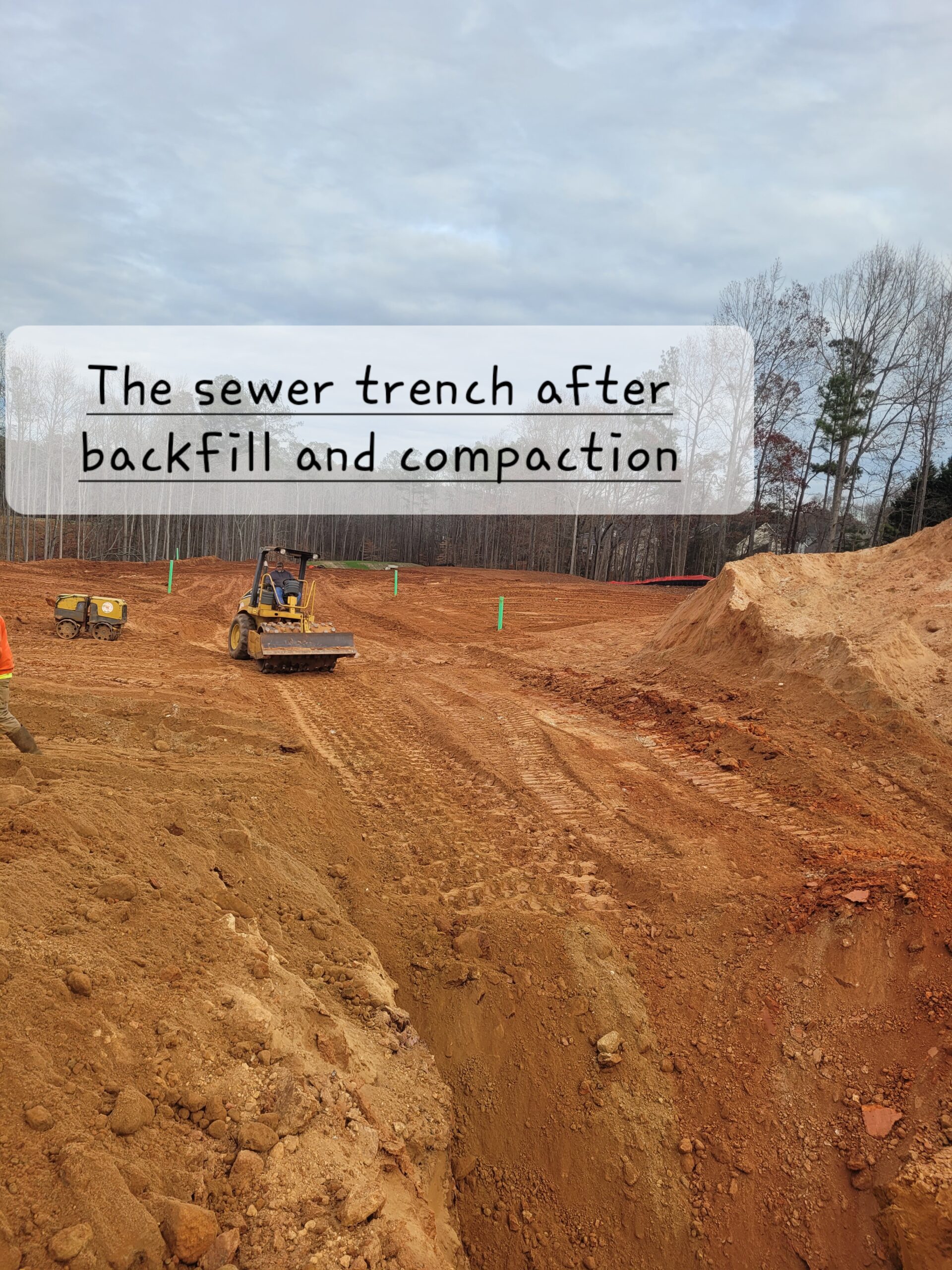
The sewer line b/n A11 & A12 manhole after backfill
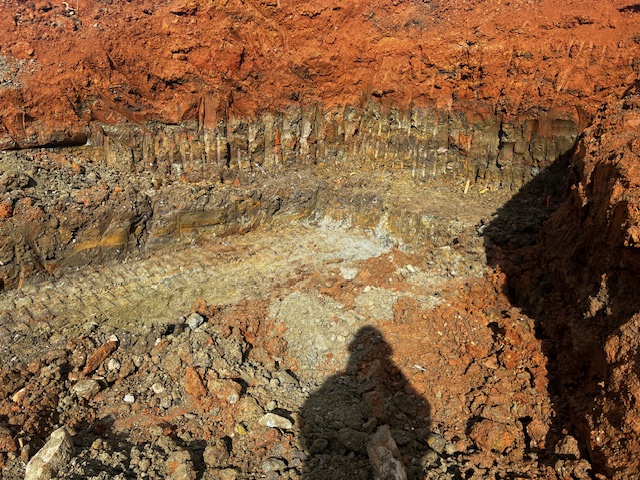
Spillway Footing Evaluation
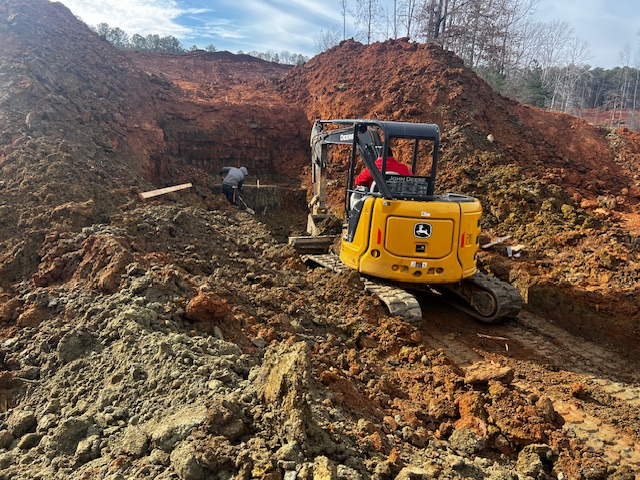
Spillway Footing Evaluation
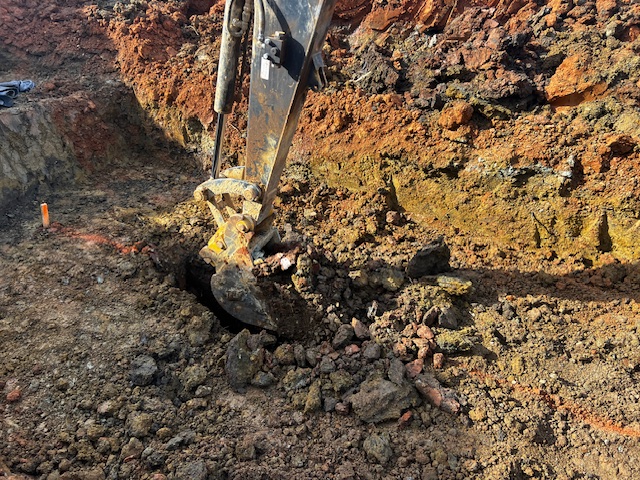
Spillway Footing Evaluation
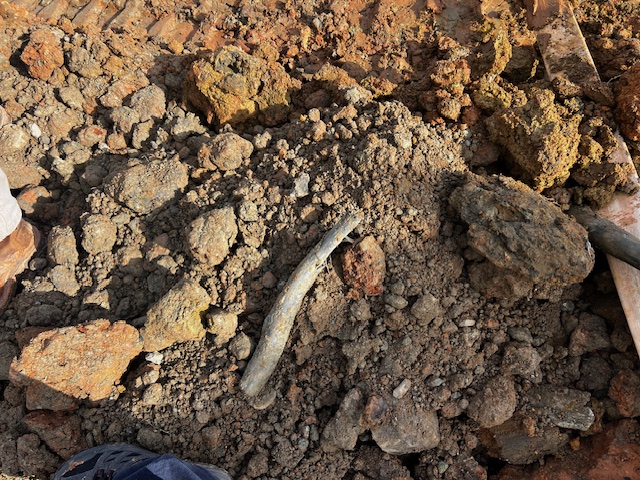
Spillway Footing Evaluation
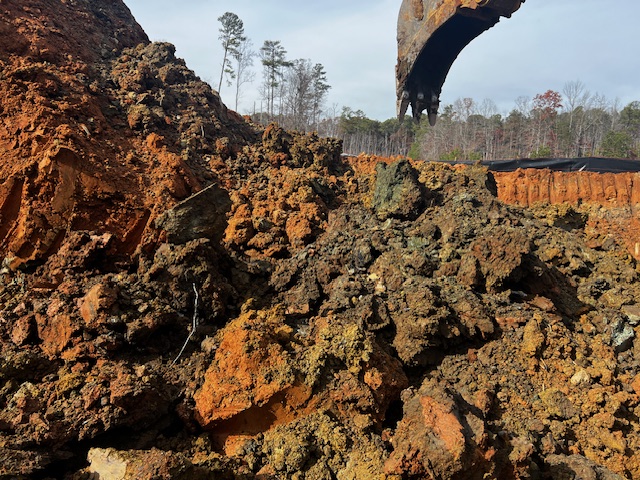
Spillway Footing Evaluation