
- Home
- Daily Field Report Report ID: 78654
- This project is inactive from admin. Download Report
Daily Field Report
Observations/Finding
As requested, the site was visited by our AS Engineering and Consulting (ASEC) representative for the purpose of providing quality control inspection and testing services. Visual observation techniques were employed to verify compliance with project drawing/specifications, applicable codes, and materials submittals. The following observations were observed on site this day.
1. Introduction
A previous request was made to evaluate the bearing capacity of the soil supporting a proposed retaining wall located adjacent to a lake. Dynamic Cone Penetrometer (DCP) tests were conducted, but the results were unsatisfactory (refer to the previous report for details). Due to these concerns, seven test pits were excavated to further assess subsurface conditions and soil bearing capacity.
2. Test Pit Findings
The following summarizes the results from the seven test pits:
Location 205
- Findings: Suspected original (residual) soils encountered at a depth of 4 feet.
- Probing: (at 4 feet) 3 inches at depth.
Location 207
- Findings: 5 feet of suspected uncompacted fill, with original soil at 6 feet.
- Probing: Fill layer probed (at 4 feet) 4–6 inches; original soil (at 6 feet) probed 3–4 inches.
Location 210
- Findings: First 3 feet consisted of organic material. Approximately 3–6 feet contained suspected uncompacted fill.
- Probing: suspected original soil at 6 feet and probed 4–6 inches.
Location 215
- Findings: No resistance at 3-6.5 feet depth. At 6.5 feet, water quickly filled the bottom of the pit.
Location 220
- Findings: Suspected original soil present at 3 feet.
- Probing: (at 3 feet in depth) 2–3 inches at depth.
Location 226
- Findings: Suspected original soil reached at 2.5 feet.
- Probing: (at 2.5 feet) 1 inch at depth.
Location 228
- Findings: First 4.5 feet consisted of a mix of organic material, topsoil, and rock. Suspected original clay reached at 6 feet.
- Probing: (at 6 feet) 1 inch at depth.
3. Analysis and Conclusion
- The test pits confirm that significant portions of the site contain uncompacted fill and organic materials, which are questionable for supporting structural loads without remediation.
- Water intrusion at Location 215 suggests potential groundwater issues that could further compromise stability and workability.
- The bearing capacity of the original soil is inconsistent, with probe depths varying across locations.
- Given these conditions, it is unlikely that the existing soil can support 3,000 PSF without remediation.
4. Recommendations
- Soil Remediation: The existing fill should be removed and replaced with properly compacted engineered fill.
- Compaction Testing: Any new fill should be compacted in controlled lifts and tested to meet design specifications for compaction and bearing.
- Foundation Alternative: If removing the fill is not feasible, proprietary foundations (e.g., piers or piles) may be required to transfer loads to competent soil.
- Drainage Considerations: Address groundwater concerns, particularly at Location 215, to prevent long-term stability issues.
5. Conclusion
The current soil conditions do not meet the necessary bearing capacity for the retaining wall. Proper remediation, soil replacement, or deep foundation solutions will be required to ensure structural stability. Further geotechnical evaluations may be needed before proceeding with construction.
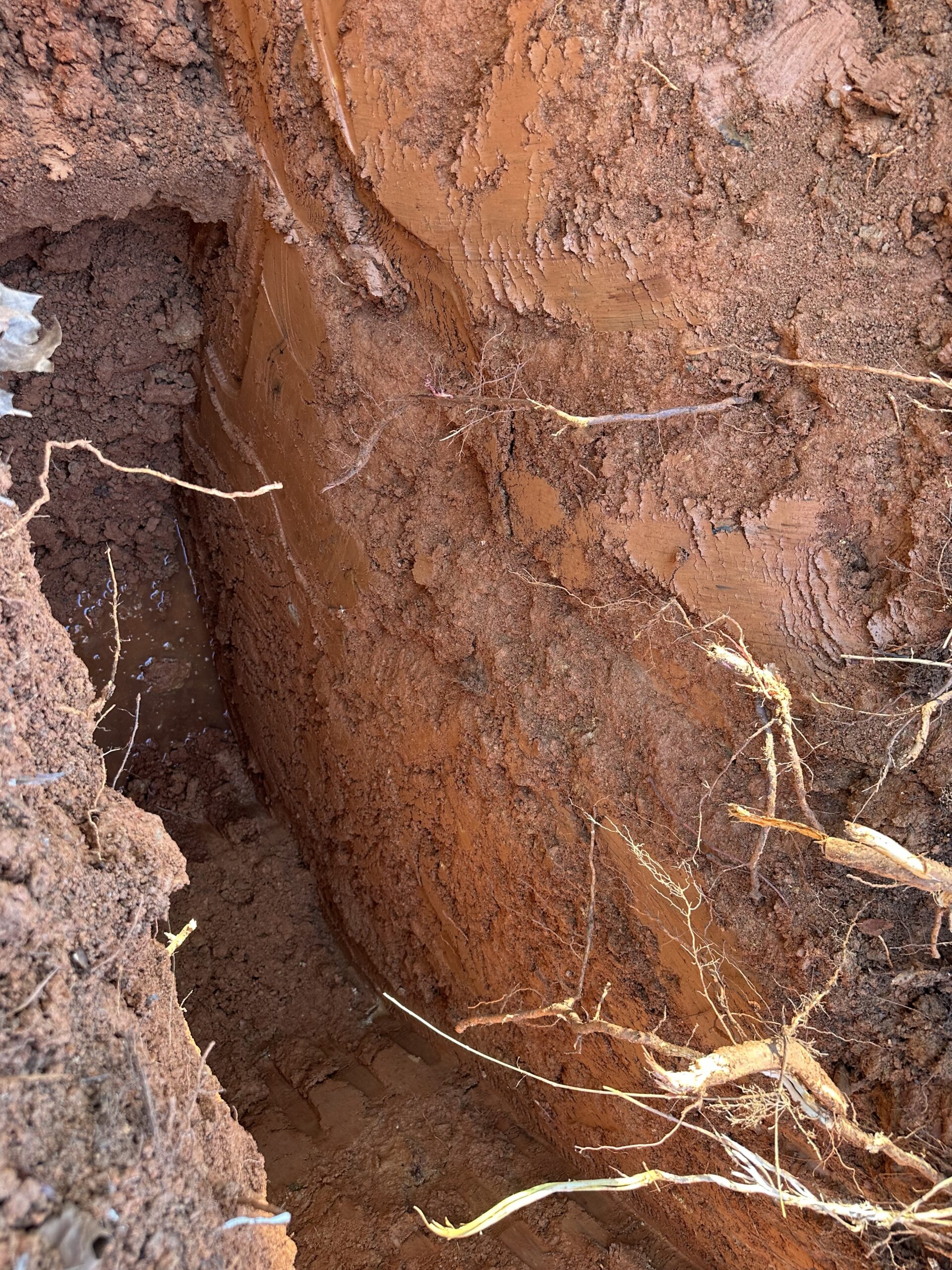
test pit 215
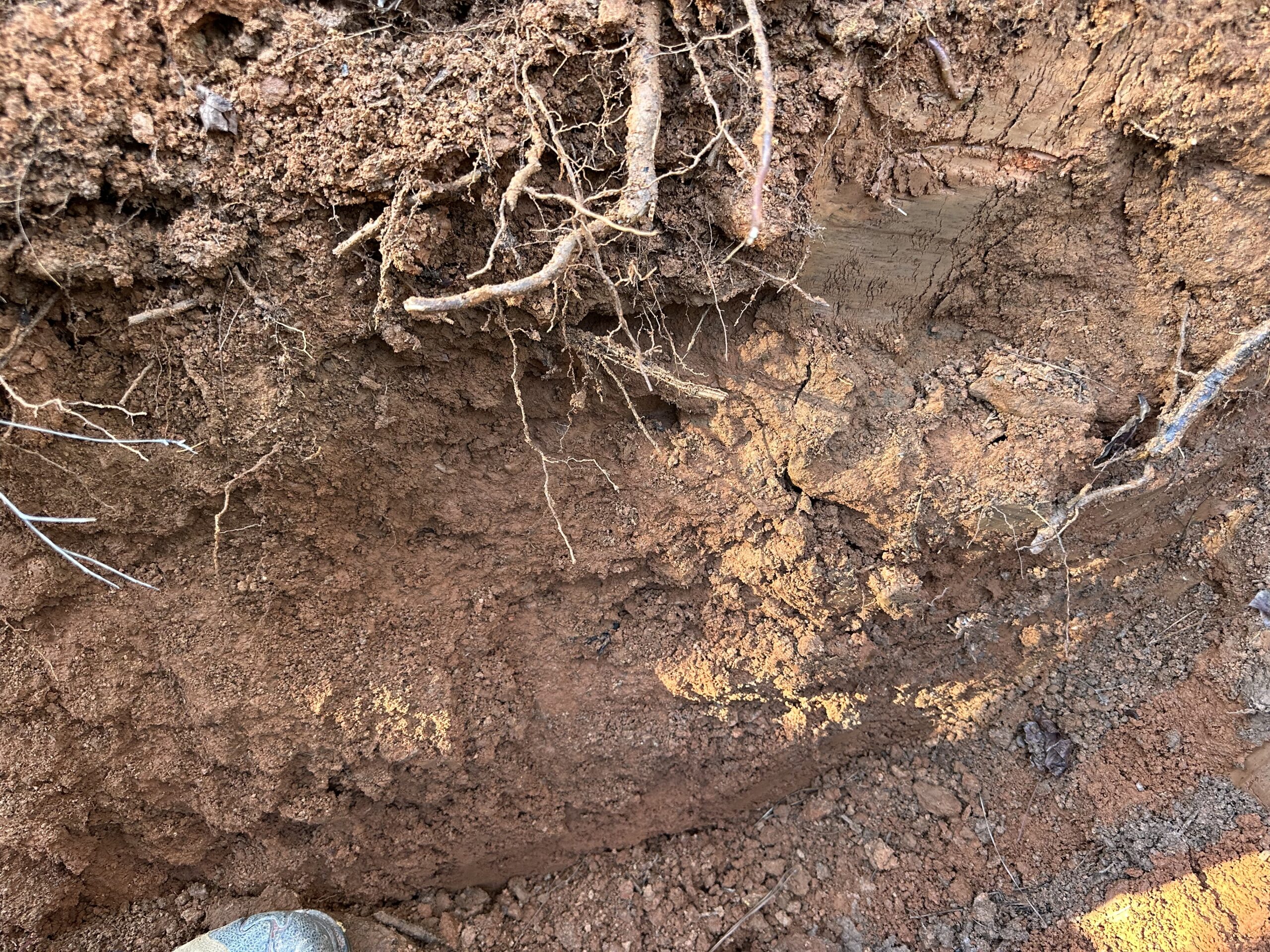
test pit 220
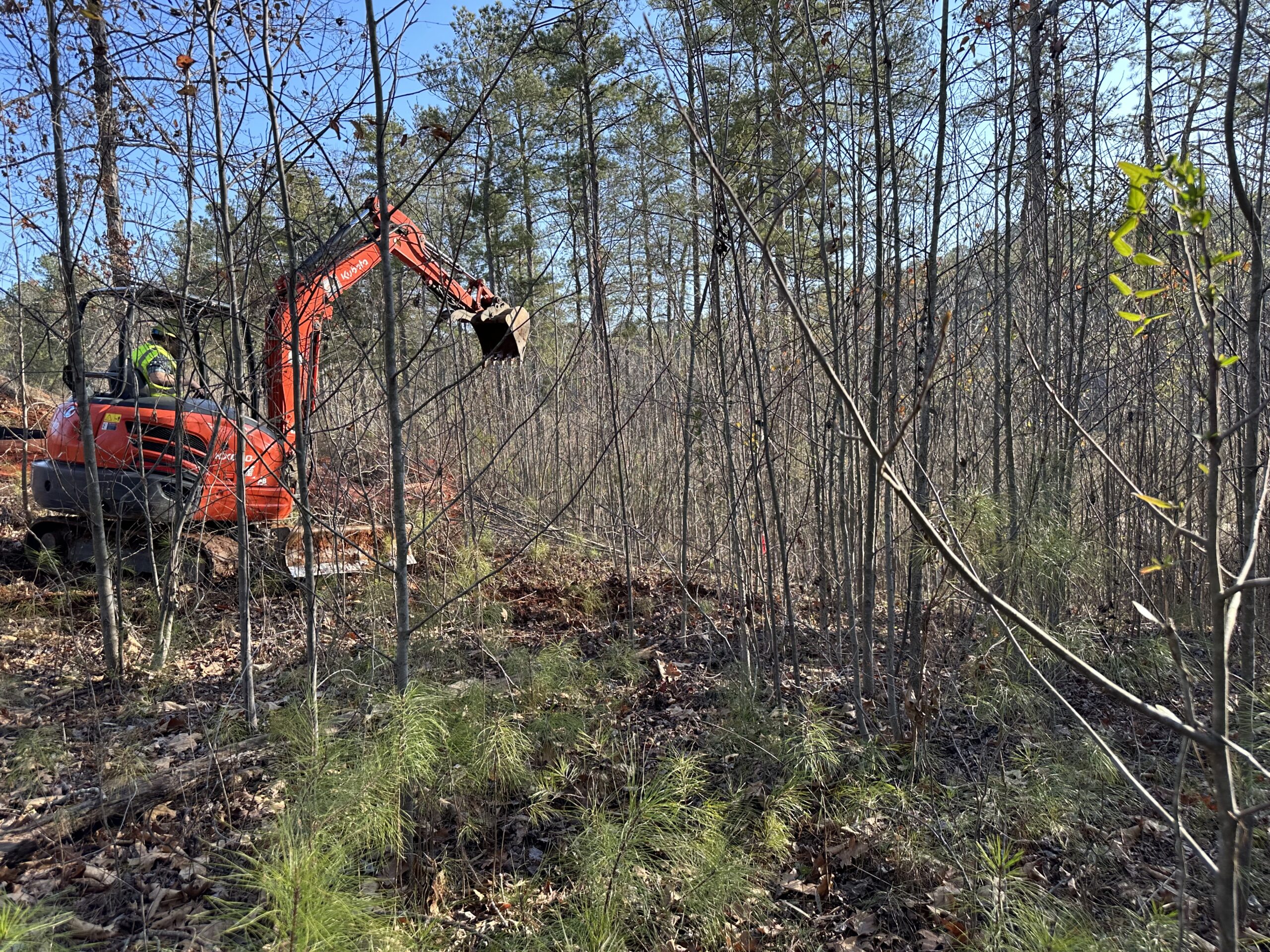
Excavator on site
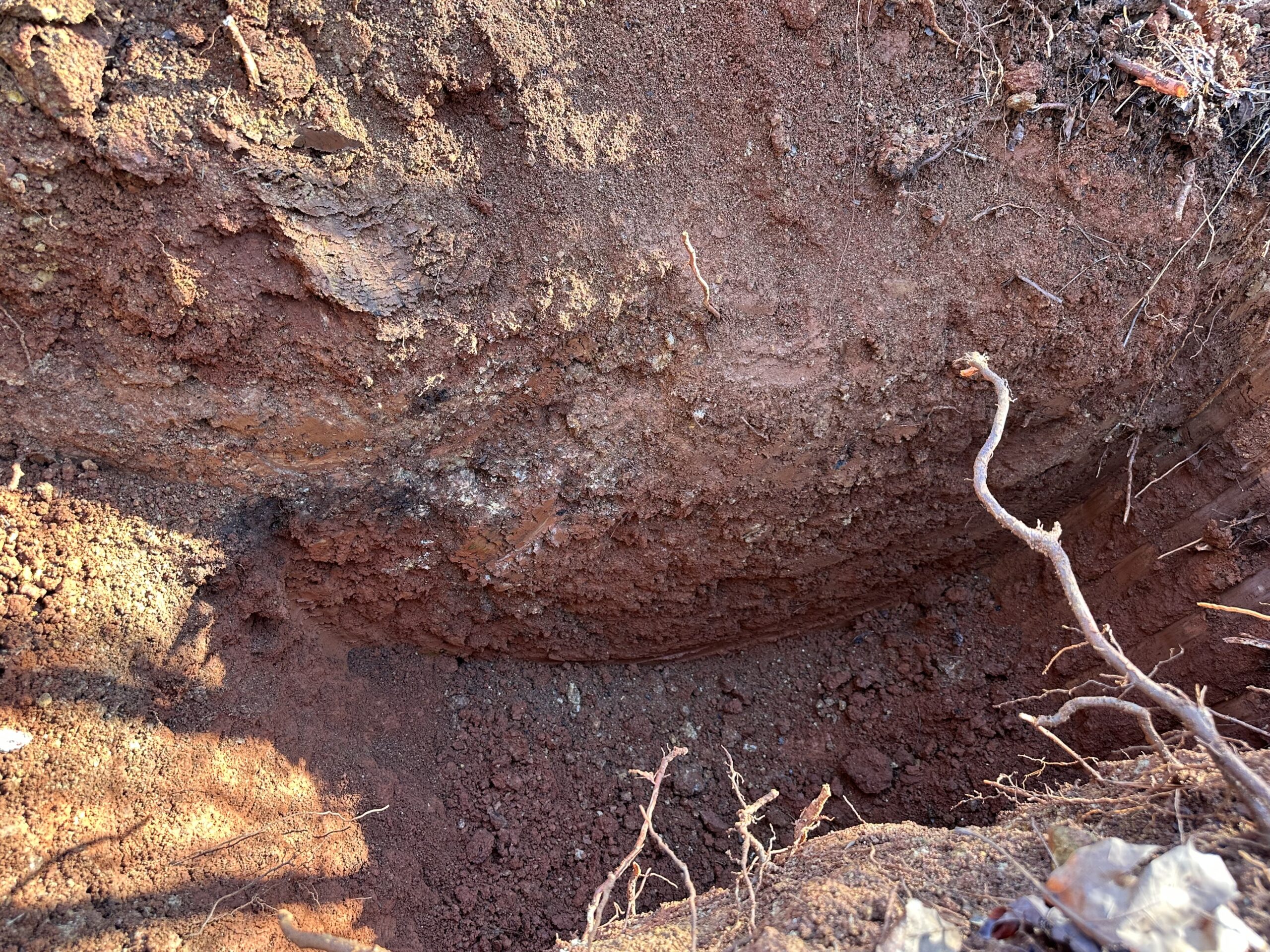
Test pit 205
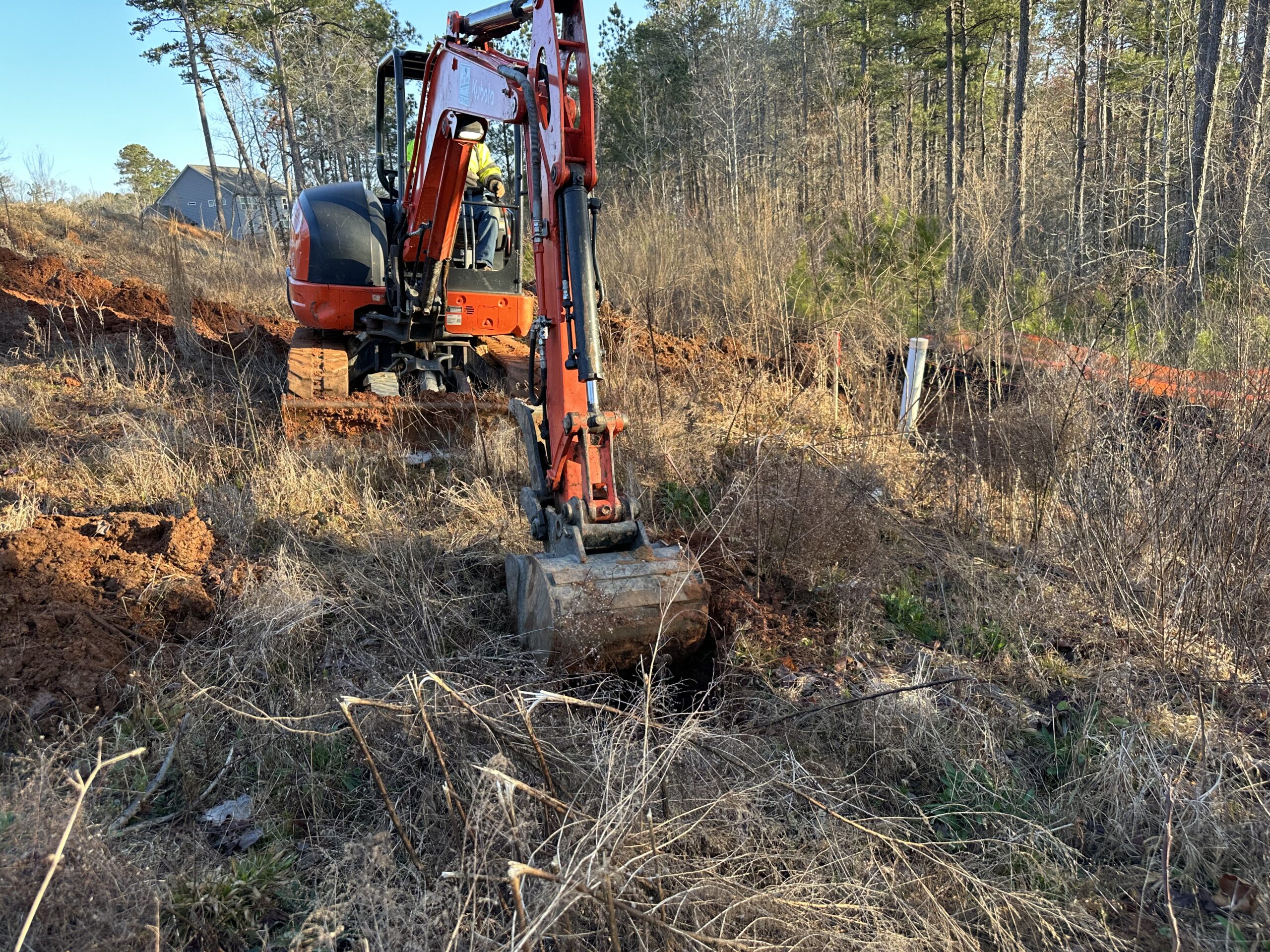
test pit 211
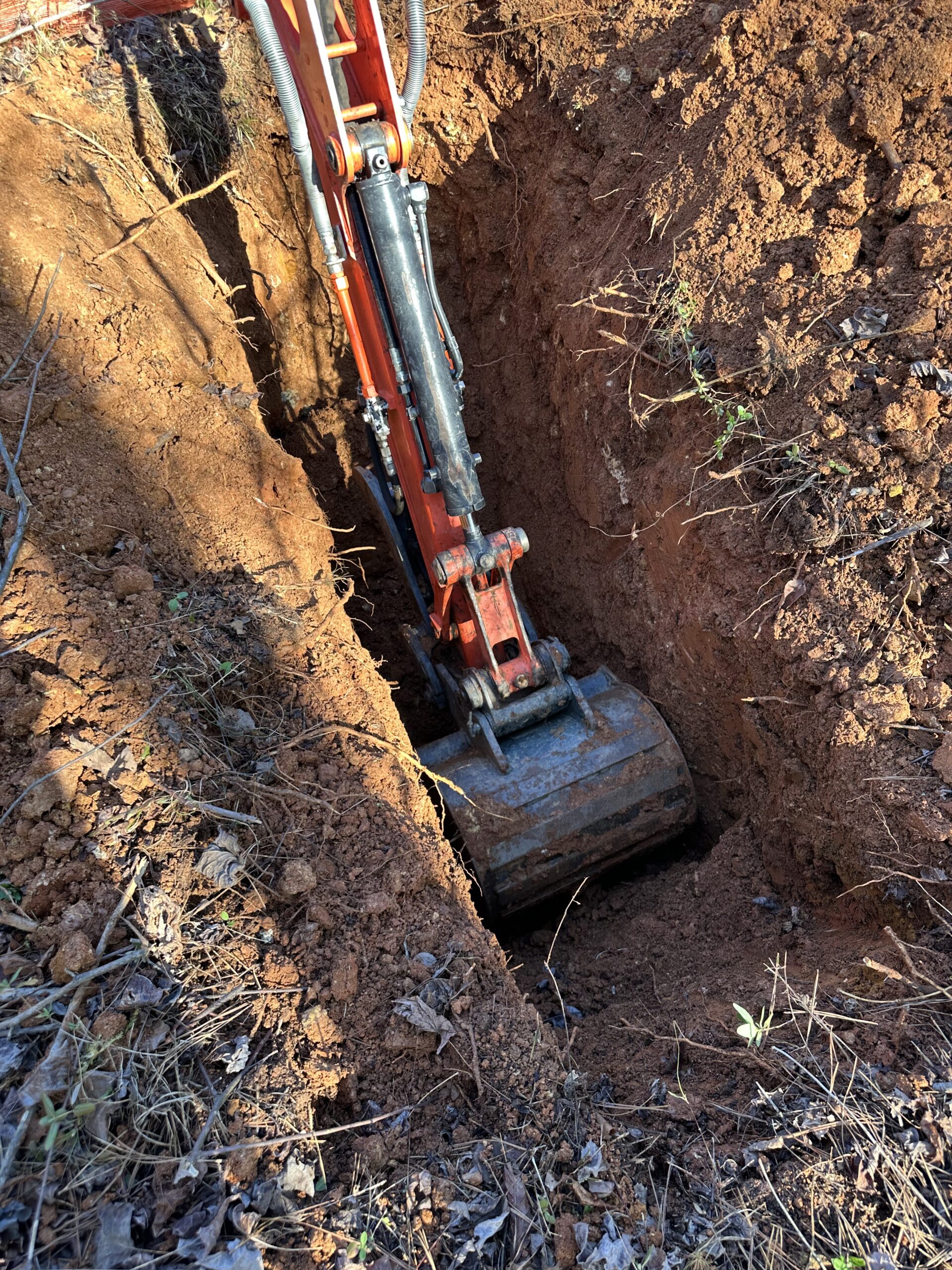
Test pit 207