
- Home
- Daily Field Report Report ID: 96227
- Edit Download Report
Daily Field Report
Observations/Finding
AS Engineering and Consulting, LLC (ASEC) conducted a site visit on July 16, 2026, to perform a visual evaluation of reported cracking in the cast-in-place reinforced concrete retaining wall at Pittman Park Garibaldi Street Stormwater project in Atlanta. The purpose of the visit was to observe the nature, extent, and apparent characteristics of the reported cracking and to provide an engineering opinion based on the conditions observed at the time of the inspection.
The site visit was attended by Brad Landfried with Lewis Contracting, Ben Kiker of Hemma Concrete, Inc., Duane Mitchell of Wade Trim, and Jacob Cockrell of the City of Atlanta Department of Watershed Management. Ramchandra Mogulla with ASEC was present for the field observations.
The cracks were located along Retaining Wall A, situated on the south side of the pond and oriented generally parallel to Delevan Street. The cracks were observed within an approximately 75-foot section of the wall extending eastward from the intersection with Retaining Wall B. A total of three predominantly vertical hairline cracks were identified within this section of the wall. The cracks were primarily located adjacent to the construction joints, with two of the cracks extending essentially the full exposed height of the wall.
At the time of the inspection, the retaining wall had not yet been backfilled. No significant crack displacement, differential movement, spalling, bulging, rotation, or other visible signs of structural distress were observed. The exposed portions of the wall and footing appeared stable based on the visual observations made during the inspection.
Based on the visual observations made during the site visit, the reported age of the concrete (approximately two to three weeks following placement), and discussions with project representatives, the observed cracking appears to be characteristic of normal early-age concrete behavior rather than evidence of structural distress.
The observed cracks were predominantly vertical, hairline in width, and generally located adjacent to construction joints. Since the retaining wall had not yet been backfilled, it had not been subjected to its intended lateral earth pressures. Consequently, flexural cracking resulting from service loading is considered unlikely at this stage of construction.
The observed crack pattern is consistent with restrained early-age volume changes associated with concrete drying shrinkage and thermal contraction. The wall-footing connection provides restraint to normal shortening of the concrete during curing, creating tensile stresses that may exceed the early-age tensile strength of the concrete. Localized restraint at construction joints and variations in section stiffness may further contribute to the formation of narrow vertical cracks.
Hairline cracks of this nature are commonly encountered in reinforced cast-in-place retaining walls. Reinforcing steel is intended to control crack widths and distribute tensile stresses rather than eliminate cracking entirely. Based on the observed crack widths, pattern, and the absence of visible displacement or other indicators of structural distress, the cracking appears to be serviceability-related and does not appear to adversely affect the structural integrity or intended performance of the retaining wall at the time of this evaluation.
It is ASEC’s opinion that the observed hairline vertical cracking is consistent with typical early-age restrained shrinkage and thermal cracking commonly encountered in reinforced cast-in-place concrete retaining walls. At the time of this evaluation, the cracking does not appear to represent structural distress or to adversely affect the structural performance or intended serviceability of the retaining wall.
ASEC recommends documenting the observed crack locations and visually monitoring them during and after placement of the backfill to confirm that the cracks remain stable and that no measurable widening, displacement, or additional distress develops under service loading. Should significant crack growth, measurable displacement, or other evidence of structural distress be observed during subsequent construction, further evaluation by the Engineer of Record is recommended to determine whether additional investigation or corrective measures are warranted.
This opinion is based solely on a visual evaluation of the accessible portions of the structure and the conditions existing on July 16, 2026. The evaluation was limited to visual inspection of the accessible portions of the retaining wall. No destructive testing, nondestructive testing, crack depth measurements, structural analysis, or verification of reinforcing steel placement was performed. The wall had not been backfilled at the time of the inspection; therefore, its performance under design loading conditions could not be evaluated.
We appreciate the opportunity to be of service to you on this project. If you have any questions regarding this report, please feel free to contact us. We will be more than happy to discuss it with you
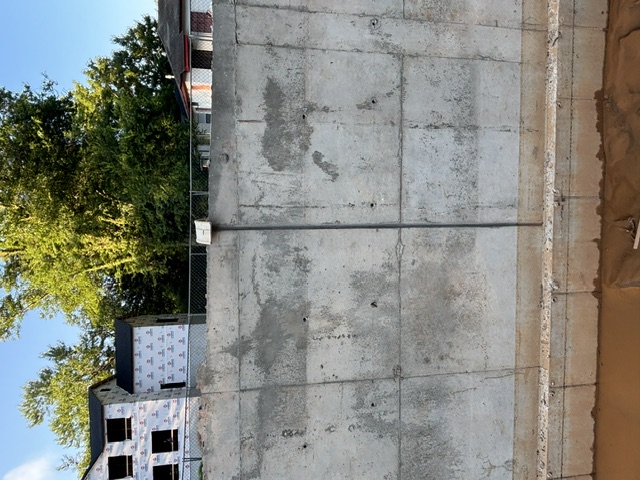
Vertical hairline crack
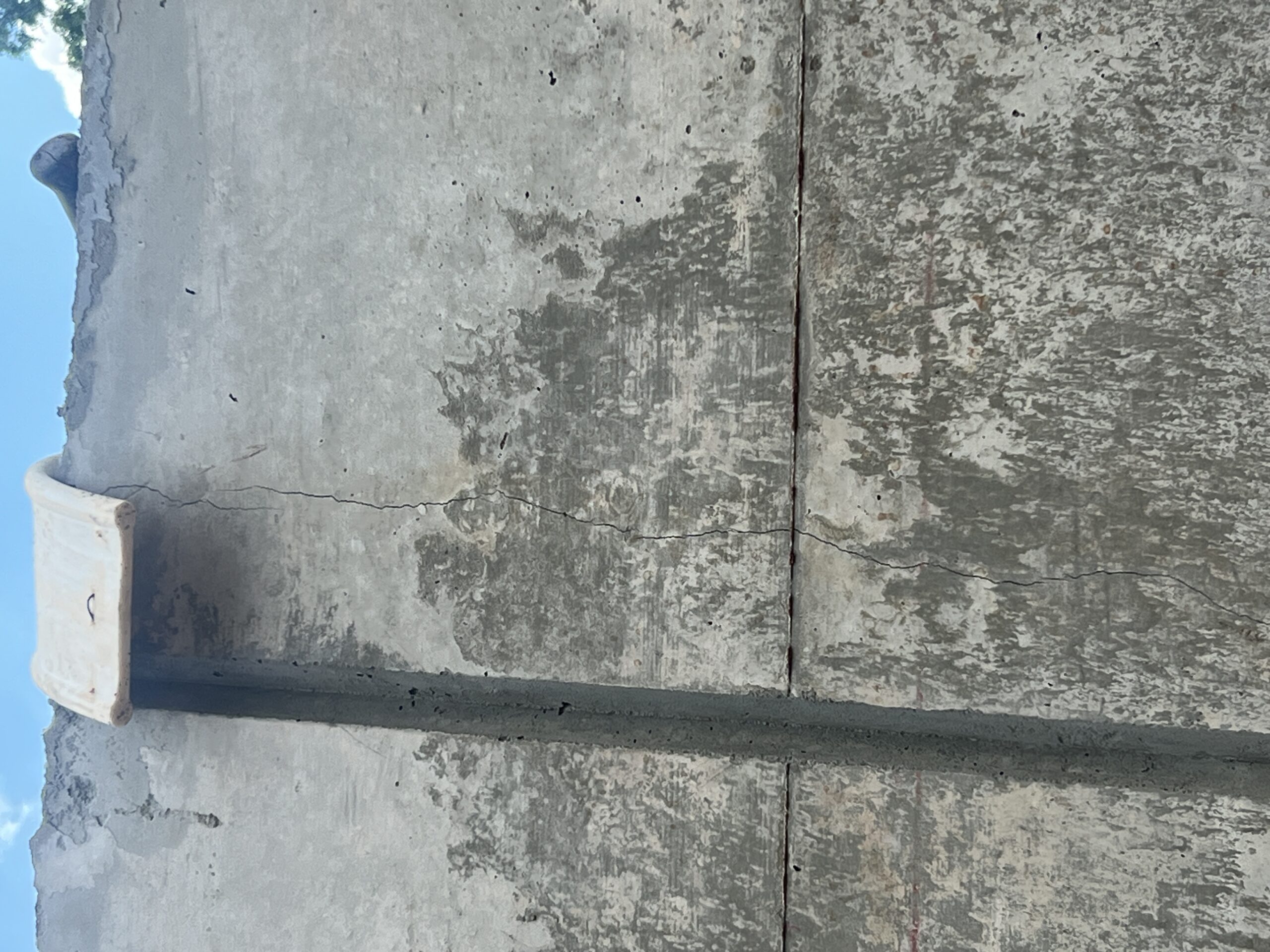
Vertical crack in the vicinity of the control joint
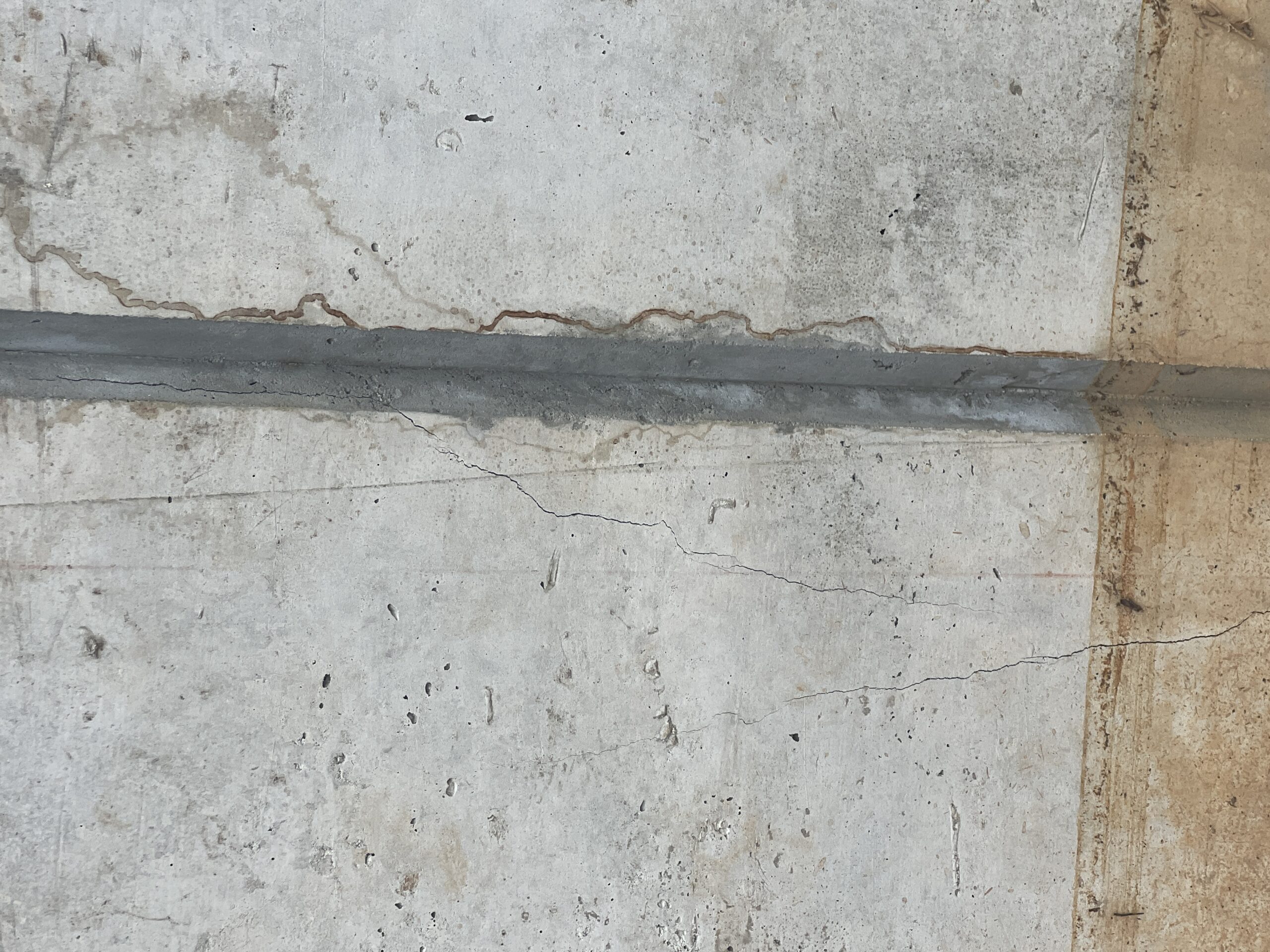
Vertical hairline crack